

In honour of National Volunteer Week, and as my very first post on the Pro Choice YQL Blog, I wanted to highlight the work of our wonderful volunteers, as well as discuss the rich history of volunteer labour in relation to abortion access in North America.
As long as pregnancy has existed, so has abortion. People with uteruses have been helping each other to end pregnancies and support them in doing so for millennia. Within the struggle for safe and legal abortion in the 20th century; the unpaid labour of women has been a driving force in legislative change, and more importantly in creating networks of care that have allowed their communities to access abortion safely.
In 1970, one year after the opening of the illegal Morgentaler abortion clinic in Montreal, a group of 17 women began a historic caravan across Canada in protest of the Therapeutic Abortion Committee (TAC) requirements to access abortion in Canada at the time.
While the amendment to the criminal code in 1968-9 declared abortion legal, accessing the procedure
was subject to the approval of 3 doctors who would deem the procedure necessary for the “health” of the patient. This created barriers to access for women who had to travel long distances to hospitals that operated TAC’s; where they were subject to the inconsistent nature of the TAC’s decisions, long wait times, and requirements of sharing their sexual and reproductive health history to access care. These barriers to access motivated both the opening of the first Morgentaler abortion clinic, as well as the historic motorcade across Canada to advocate for abortion to be available freely and on demand in Canada.
The motorcade began in Vancouver, travelling east and hosting demonstrations along the way to garner support from feminists nationwide. Upon arrival in Ottawa the Caravan was joined by advocates from eastern Canada to occupy the prime minister’s front lawn, lead a rally of 500 women on Parliament Hill, and chain themselves to chairs in the viewing gallery of parliament, leading to a first of its kind federal shut down in the house of commons.

While abortion was not federally decriminalized until 1988 in Canada, the advocacy of the volunteers who executed this historic protest created awareness and conversation around women’s rights to access abortion that ultimately resulted in the successful challenge of Canadian abortion law on the basis that it violated the constitution.
After birth control was legalized in Canada in 1969, the Calgary Birth Control Association (CBCA), was established. Operating out of the basement of a Unitarian Church, a group of feminists quietly began operation of an abortion referral network, assisting patients in travel and access to abortion care in Seattle. Motivated by the gaps in care for women seeking abortion in Alberta; such as limited hospitals offering TAC’s, and wait times leading to women becoming ineligible for care.
Differing from other abortion advocacy groups at the
time, the CBCA was less interested in lobbying at a federal level, and instead focused on the material need to access abortion regardless of the law. They maintained a network of providers of abortion in states where it had already been legalized, and referred women with the financial means to travel to these clinics to secure abortion privately.
Their approach was intended to secure timely abortions for those seeking them, but was also meant to take pressure off the public health system, so women who could not afford to travel would have a better chance at accessing public healthcare in a timely manner. The CBCA’s mission beyond providing referrals to patients seeking abortion was to increase access to sexual
health information to young people, and to combat misinformation around birth control on the
heels of its legalization.
The CBCA was not the only volunteer organization in Alberta working to increase public access to birth control information and sexual health care in the 1970’s. With sexual health being added to the public school curriculum, many parents wrote to newspapers and politicians about whether access to education around sexual health, birth control and abortion should be based on parental permission.
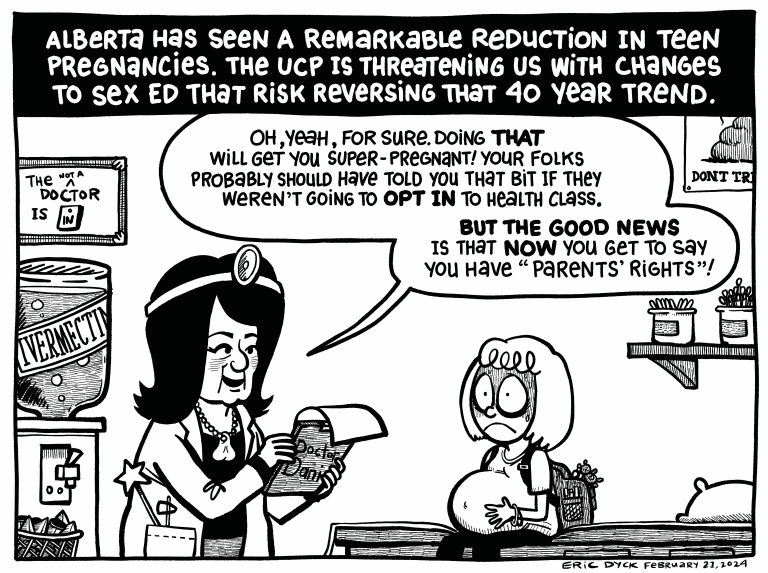
Opting for “Sexual Wellbeing for All”: Community & Sex Education in Alberta, 1970s and 2024
In response, volunteer activists created organizations throughout the province such as the Lethbridge Birth Control & Information Centre, the Edmonton Family Planning Association, and several smaller activist birth control services based in rural communities. These organizations created resources, provided
referrals and educational opportunities in their communities, while tirelessly lobbying for change and access on a federal level.
Prior to the Roe verdict in the United States, networks of volunteers collaborated to provide safe abortion to patients. Operating from 1969 to 1973 in Chicago, when abortion was considered a felony homicide in Illinois, the Abortion Counseling Service of Women’s Liberation (also known as the Jane Collective or the Jane Network) maintained an underground system of care for people seeking abortions. Patients would call a hotline, leave their contact information and then be referred to a network aligned provider who could offer the procedure. A volunteer would help to coordinate transport to abortion care and follow up a few weeks later to ensure everything went smoothly.
The Jane collective operated on a pay what you can system that allowed many women to access abortions when they otherwise would not have been able. In 1971, when the main provider of abortion for the Jane Collective was found to not be a licensed medical doctor; 4 members of the collective learned to perform the procedure themselves in order to continue providing
necessary and lifesaving care to their communities. After a raid in 1973, 7 members of The Jane Collective were charged with abortion or conspiracy to commit abortion. Their lawyer had the case delayed with the upcoming expected Roe verdict and after the Supreme Court decision the charges against the Jane Collective members were dropped. The Jane
collective performed an estimated 11,000 abortions in the years they were active, driven by the unpaid labour of women relentlessly caring for each other.
These are only a few examples of the volunteer labour that has driven the abortion access movement in North America. It cannot be overstated that the work of women seeking to bridge gaps for one another has been the primary driving force of change in Abortion and sexual health care information worldwide. This work continues to this day. Creative work arounds of barriers to access, care for those who have sought abortion, and protection of patients of abortion clinics are all modern examples of volunteer labour that continues to
bridge the gap for people accessing abortion.
At Pro-Choice YQL, volunteers play a key role in helping increase public education about sexual health and abortion access at tabling events throughout the year. Volunteers who are interested in direct patient care can also be further trained, assisting in transporting patients to appointments and directing them to relevant care through the access line.
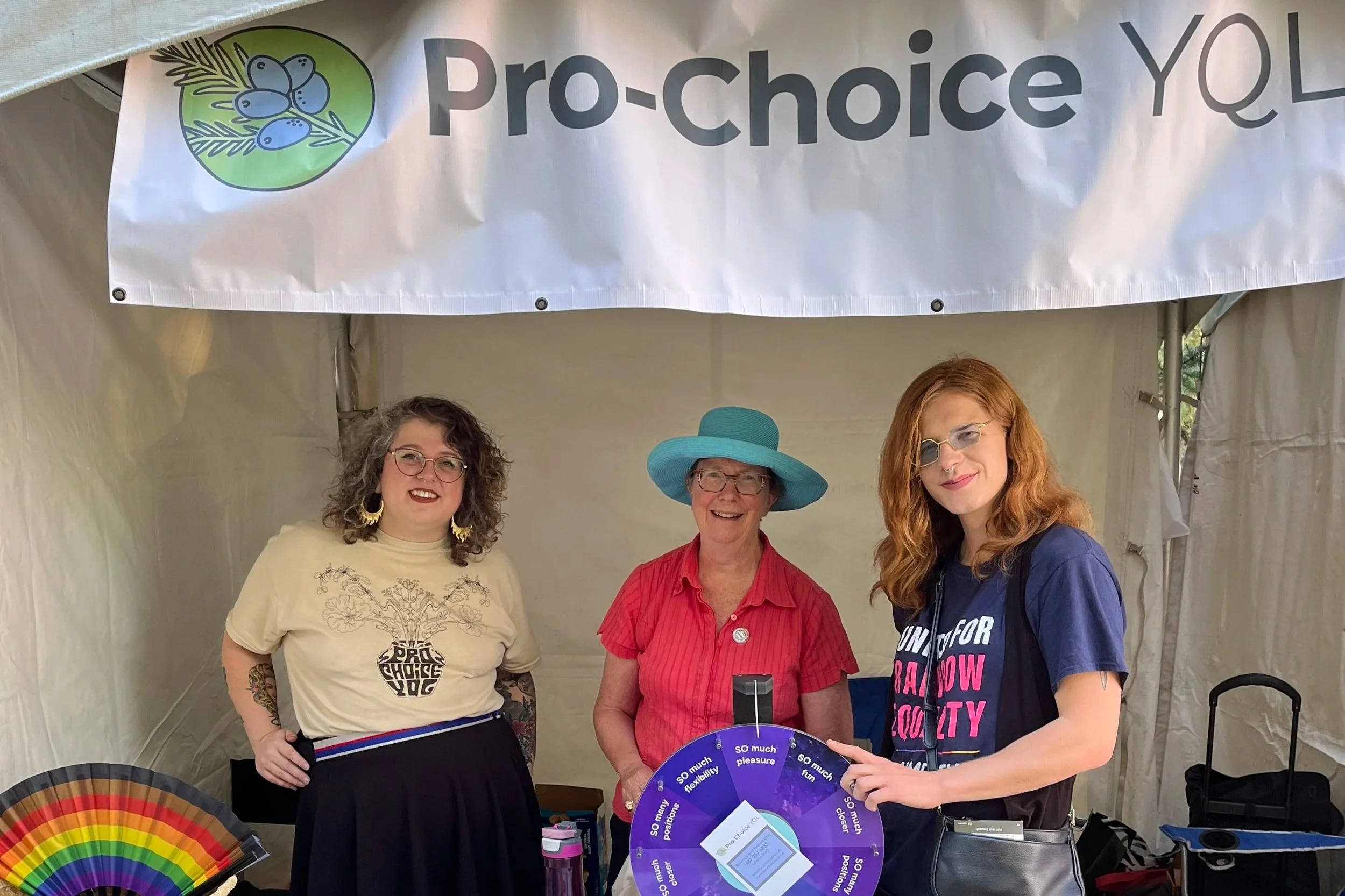
Calgary Pride Volunteers
We are always looking for volunteers who can help us increase access and awareness of sexual health throughout Alberta. In advance of summer outreach; we will be facilitating volunteer training later this spring, so it is a great time to reach out if interested in more information or to sign up as a volunteer. Please visit our Volunteer Page or email education@prochoiceyql.ca to get started.
Help someone in Alberta Access Abortion