

Your Health Card Is Changing. Here's What Albertans Need to Know
Your Alberta health care card is what allows you to access publicly funded health care through the Alberta Health Care Insurance Plan (AHCIP), including doctor visits, hospital care, procedural abortion, and Mifegymiso for self-managed abortion. Every eligible Albertan has a unique Personal Health Number (PHN), and recent changes to Alberta's health care card system could affect how you access and prove your eligibility for care. We have put together some information on what changed, who it affects, and what you need to know:
-
Provides eligible Alberta residents with publicly funded coverage for medically necessary health care services.
This includes visits with physicians and psychiatrists, hospital care, diagnostic tests like blood work and X-rays, medically necessary surgeries, and certain specialized procedures, including gender-affirming surgeries that meet program eligibility requirements.
AHCIP also covers hospital stays, medications given during treatment, nursing care, routine surgical supplies, and medically necessary ambulance transfers between Alberta hospitals.
-
Your Personal Health Number (PHN) is the unique number that identifies you in Alberta's health care system.
Health care providers use it to confirm your identity and access your health records and health coverage information.
You'll need your PHN whenever you access publicly funded health care in Alberta.
What Changed to Alberta Health Care Cards?
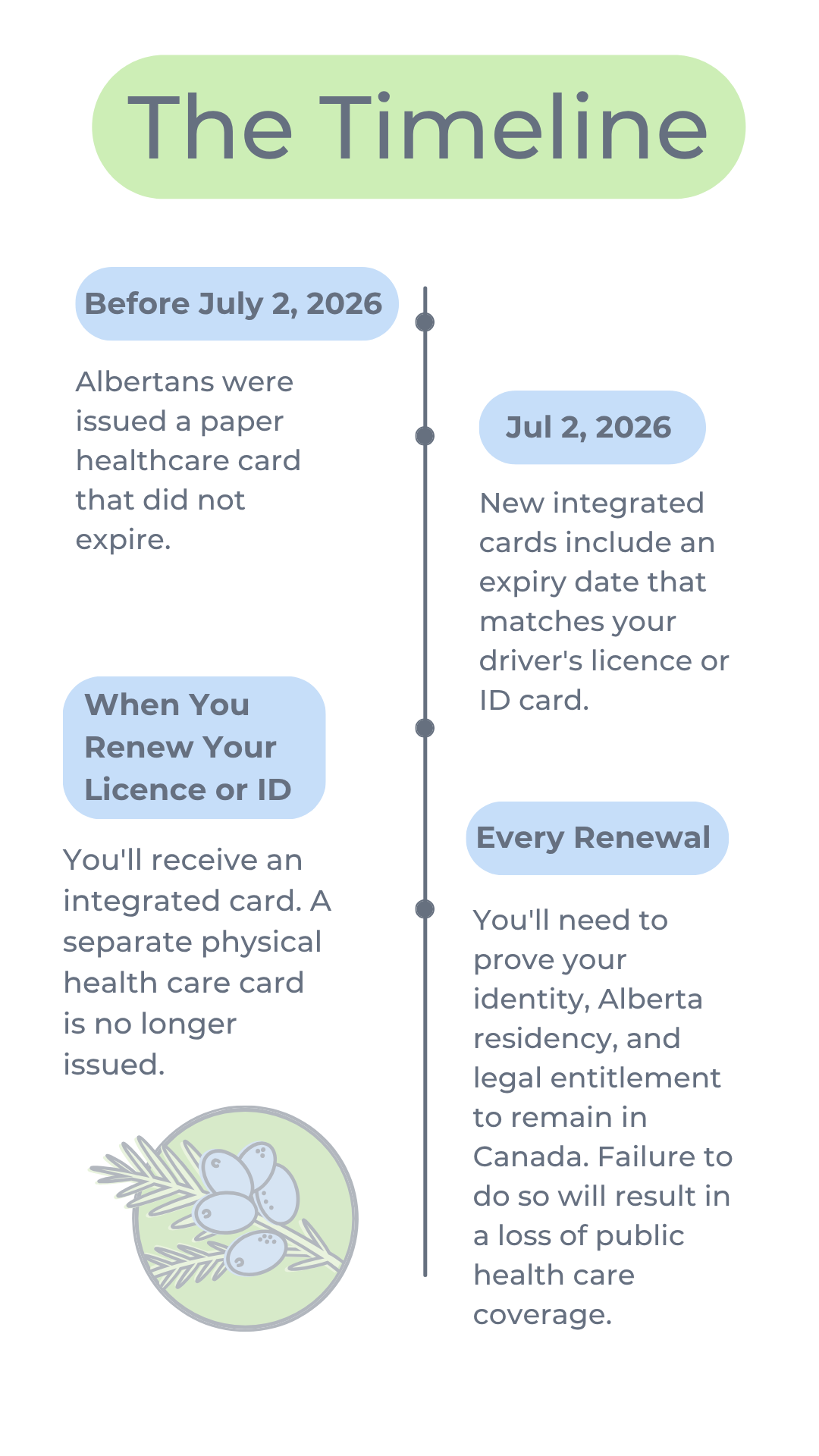
On July 2, 2026, Alberta introduced changes to its integrated health care cards. If you renew your driver's license or Alberta ID card, your health care information may now be combined with it.
Your Health Coverage Now Expires with Your License
If you have an integrated health care card, your Alberta Health Care Insurance Plan (AHCIP) registration now expires on the same date as your driver's license or Alberta ID card.
Remember to renew your identification and your Alberta Health Care Plan number before it expires to keep your information up to date. This is important to ensure you remain enrolled in the public healthcare program - otherwise, if you do not renew your registration in the Alberta Health Care Insurance Plan you will lose access to non-emergency public health care services in Alberta
Your Health Card Is Now Part of Your ID
With an integrated card:
Your Personal Health Number (PHN) is printed on the back of your driver's license or Alberta ID card.
Your card serves as proof that you are registered for AHCIP.
You can use it as photo identification when accessing health care services.
You will no longer receive a separate physical Alberta health care card after your integrated card is issued.
Implications
Access to Documentation
To renew an integrated health card, Albertans must provide documents proving their identity, residency, and legal entitlement to remain in Canada. People who have changed their names must also provide additional documentation. A list of acceptable documents are below.
Privacy
The new integrated card combines personal identification with health care registration by displaying your Personal Health Number (PHN) on your driver's license or Alberta ID card.
Privacy experts, including Alberta's privacy commissioner Diane McLeod, have raised concerns that placing health identifiers and citizenship markers on widely used identification documents could increase privacy and identity fraud risks if cards are lost, stolen, or exposed during everyday activities that have nothing to do with health care.
The Commissioner noted these concerns shortly after a significant breach exposed the personal information of nearly three million Albertans. Driver's licenses are issued through the Registrar of Motor Vehicles, which is not subject to Alberta's private-sector privacy legislation. As such, if a breach were to happen, the Registrar is not required to inform those affected.
Delay of Care
When administrative systems become more complex or require additional documentation, they can create another reason for someone to delay seeking care.
Even short delays can have meaningful consequences, particularly for time-sensitive health services like abortion, where access becomes more limited as pregnancy progresses. We can support you navigating the process of renewing your health care, and support you accessing care if you become unenrolled or are new to the province and do not qualify for residency yet.
Reducing administrative barriers is a public health issue. Making it easier for people to access timely, confidential care supports healthier communities and helps ensure that everyone can exercise their right to make decisions about their own bodies.
These changes are happening quickly, and are confusing for all of us. We will share and update information about accessing and staying enrolled in the public Alberta health care plan as we learn more.
Learn more about your Alberta Health Care Insurance Plan
Types of Healthcare Cards
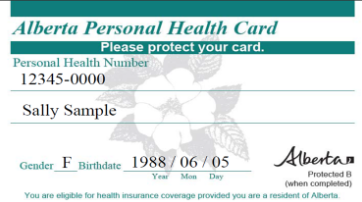
Standalone Health Card
The paper card most Albertans residents have.
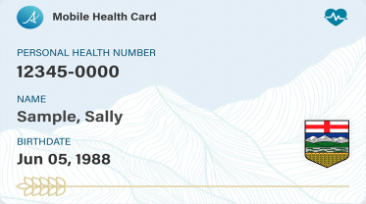
Mobile Health Card
The digital version of the Standalone Health Card
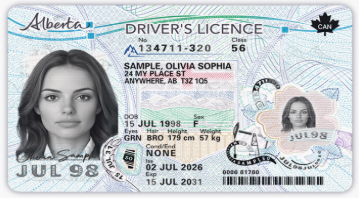
Integrated Health Card
An Alberta drivers license or ID card that also contains your personal health number
Renewing Your Driver's License or Alberta ID
To renew your identification, you'll need documents that prove:
Your identity
That you live in Alberta
That you are legally entitled to be in or remain in Canada
If you've changed your name, you'll also need supporting documents, such as a marriage certificate or legal name change certificate.
Citizenship Markers
New Alberta driver's licenses and ID cards may include a citizenship marker, if applicable.
You do not need to be a Canadian citizen to get an Alberta driver's license or ID card. However, if you are not a Canadian citizen, your card will not display a citizenship marker.
What if I don't have an Alberta Health Care number?
If you are not already enrolled in the public health care program, and you have been a resident of Alberta for 3 months, you may be eligible for public health care. This is required to access any form of non-emergency public medical care in Alberta and may be required to access hospital based care or care at a public health facility. Without a personal health care number, you may be required to return to your province of residency for non-emergency medical care.
If you need sexual, reproductive and/or gender affirming, we can help, no matter your health care plan status. Your information will be kept confidential and safe.
How do I Apply for Alberta Health Care Insurance Plan?
Proof of Legal Entitlement
Examples include:
Secure Certificate of Indian Status
Permanent Resident Card
Work Permit
Study Permit
Visitor Record
Resident Visa or Confirmation Document valid for more than 90 days
Proof of Canadian Citizenship
You do NOT need to be a Canadian citizen to get an Alberta driver's licence or ID card. However, your card will not display a citizenship marker.
Examples include:
Canadian Birth Certificate
Canadian Passport
Canadian Citizenship Certificate
Canadian Citizenship Card
Canadian Citizenship E-Certificate
NEXUS, FAST, or EXPRES card showing Canadian citizenship
Non-eligible residents include:
members of the Canadian Armed Forces
federal penitentiary inmates
refugee claimants
refused or failed refugee claimants
people with expired immigration documents
To request an eligibility review, write an appeal letter to the AHCIP office and include:
the reasons for your request
any additional supporting documents.
Mail your letter and supporting documents (photocopies) to:
Alberta Health
Attention: Alberta Health Care Insurance Plan, Eligibility Review
PO Box 1360, Station Main
Edmonton, Alberta T5J 2N3
If you are unable to provide acceptable proof that you are legally entitled to be in, or remain in, Canada, you may be eligible for a one-time 60-day grace period to allow time to obtain the required documents. To request this grace period, you will need to visit a registry agent in person and pay the applicable fee. You will receive an interim driver’s license or ID card receipt for use during the 60 day-grace period.
Canadians moving to Alberta
If you have moved to Alberta from another province or territory and intend to live here for 12 months or more, you must apply (register) for Alberta Health Care Insurance Plan (AHCIP) coverage within 3 months of establishing residency in Alberta.
In Alberta, your coverage begins on the first day of the third month following the date you established residency in Alberta. If you apply later, the effective date of your coverage is determined when you register.
For example, if you establish permanent residency in Alberta on July 12, your coverage is effective October 1.
While you're waiting, you can usually continue using your previous provincial or territorial health card. Check with your former province to confirm what services remain covered.
People moving from outside Canada
If you are moving, immigrating, or returning to Alberta from outside Canada, you might be eligible for coverage from the date you established residency.
To avoid delays:
Apply within three months.
Bring your immigration documents to a registry office.
If you don't have an entry stamp, a CBSA Travel History Report may be accepted.
International Students
You may qualify for AHCIP if:
You have a 12 month study permit for an Albertan educational institute.
You plan to live in Alberta for at least 12 months.
International students who transfer to an educational institute outside Alberta or move to another province or territory are no longer eligible for AHCIP coverage and must contact AHCIP to have their coverage cancelled.
Students planning to return to another province after graduation should generally keep their home province's health coverage.
International Students under 17 years of age must have a parent, guardian or custodian register them for coverage. Complete the Application for Children of Non-eligible Parents.
Military families
Military families moving to Alberta do not have to wait for AHCIP coverage.
Coverage begins as soon as residency is established, provided family members apply within three months.
Arriving ahead of a spouse or dependents
If your spouse and dependents join you before 12 months, coverage will be effective for everyone on the first day of the third month after they arrive, or on the first day of the thirteenth month for you, whichever comes first.
Dependents
Dependents include:
Spouses
Adult interdependent partners
Children under 21
Full-time students under 25
Adult children with qualifying disabilities
Single children who are wholly dependent on the parent(s), including adopted children, foster children (if an income tax deduction was claimed) and wards of the court
In cases of separation or divorce, the custodial parent registers the children
in cases of joint custody, children are registered on the account of one or the other parent, but not both, as agreed to by both parents
If you paid for a medical visit while eligible
If you paid for an insured health service and were eligible for AHCIP coverage, you may be eligible for reimbursement.
Take your new personal health card and your receipt to the place where you received the services.
The provider may submit a ‘payment-to-patient’ claim to AHCIP or reimburse you directly. You may need to contact the AHCIP Contact Centre to discuss your effective date.
Paid out of pocket? You may qualify for reimbursement.
Help someone in Alberta Access Abortion
