
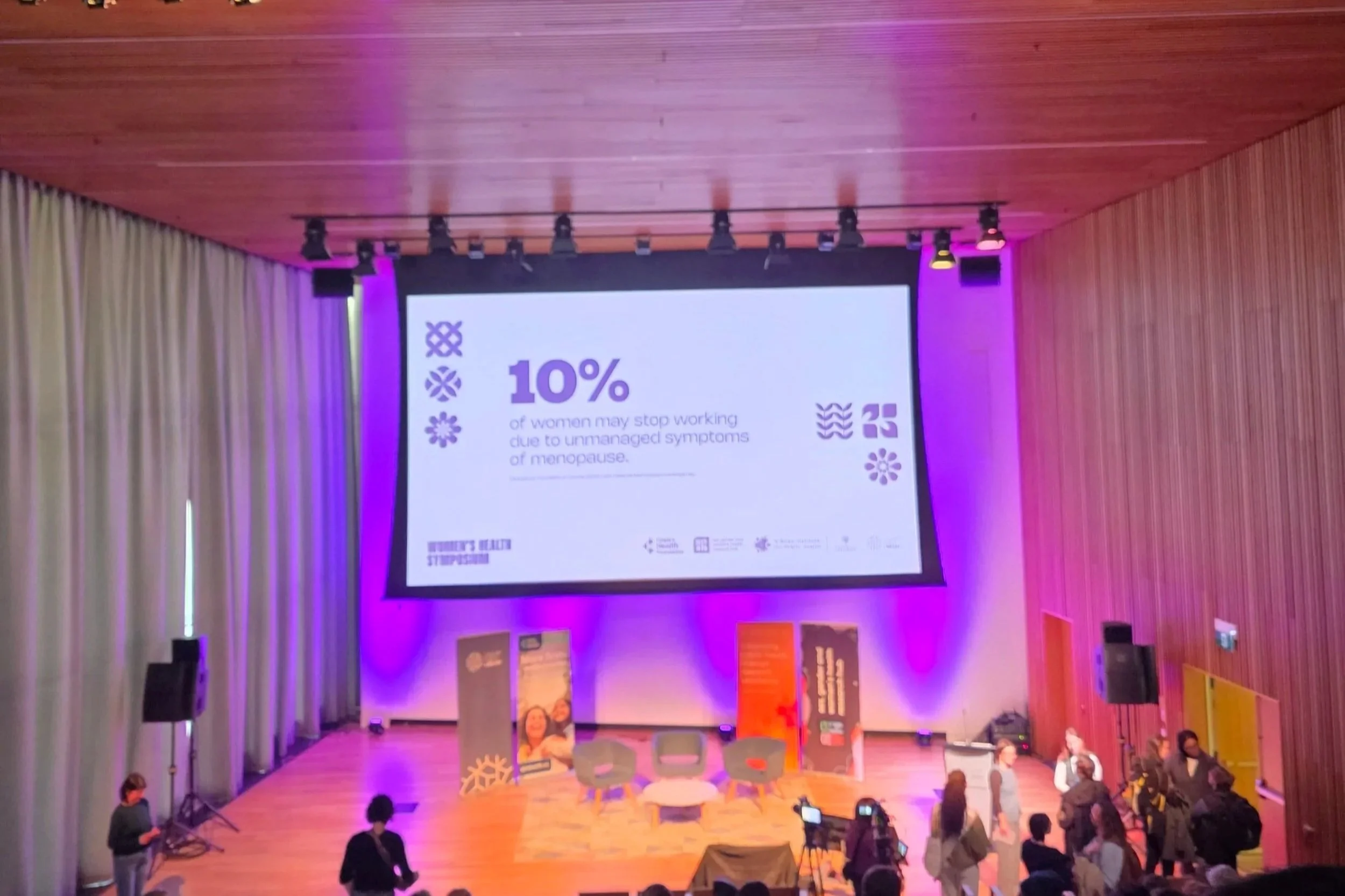
Last Saturday, members of Pro-Choice YQL attended the Women’s Health Symposium at the Calgary Central Library, hosted by the Calgary Health Foundation, the University of Calgary’s O’Brien Institute, and the Sex, Gender, and Women’s Health Research Hub. The event was free and open to the public, bringing together experts across eight panels to talk about women’s health, research, and lived experience.
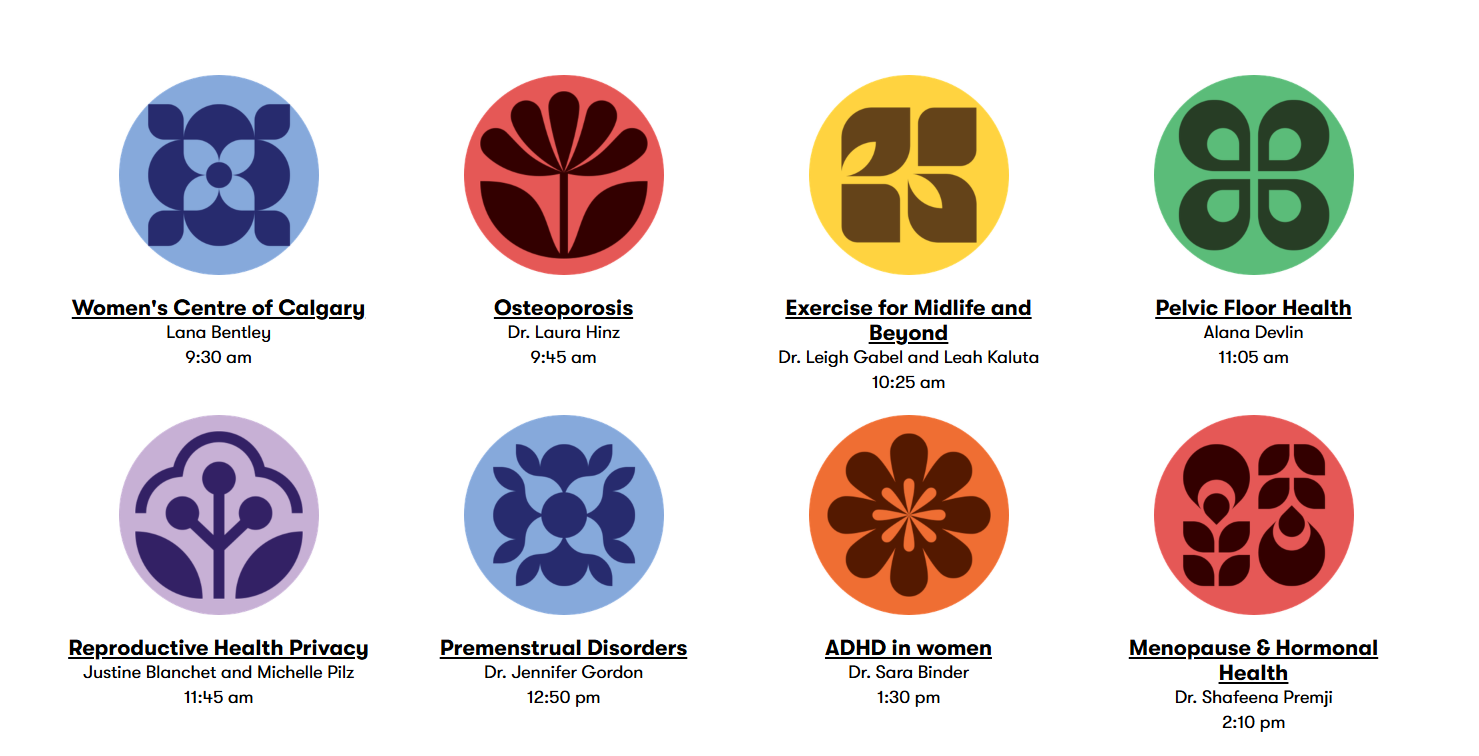
Often, conversations about women’s health happen behind closed doors, in academic journals, or in clinical settings that can feel inaccessible or intimidating. By opening these discussions to the public, the symposium created space for community members to ask questions, share experiences, and learn about the realities of women’s health in a way that was practical and honest.
One of the fundamental takeaways from the day was how little many women and girls are taught about their own bodies. From menstrual health to mental health to sexual health, many people grow up without clear information about what is normal, what is not, and when to seek care. This gap in education has real consequences. When people lack the language or knowledge to describe what they are experiencing, it becomes harder to advocate for care, recognize symptoms, or access support.
The symposium also highlighted how privacy intersects with health. We were reminded that the websites we visit and the searches we make can be tracked through cookies and other digital tools. In a time when reproductive health information is increasingly politicized, understanding digital privacy is part of protecting our autonomy. While digital tools can be a great - and sometimes only - way for someone to access sexual and reproductive information, it can also present a danger for people in situations where discretion is necessary. We have previously written a blog on some digital best practices when accessing abortion care
One of our favourite panels focused on the ways mental health and neurodiversity intersect with reproductive health, exploring the impact of untreated ADHD in girls and young women. Research shows that girls with childhood ADHD experience significantly higher rates of unplanned pregnancy, with approximately 42.6 percent of girls with ADHD reported an unplanned pregnancy, compared with 10.6 percent among those without ADHD. The reasons are complex, but impulsivity and risk-taking behaviours associated with untreated ADHD can increase vulnerability. These pregnancies can then be associated with a range of challenges, including higher rates of perinatal depression, fewer prenatal visits, and poorer maternal-fetal attachment.
A concept that stood out from the ADHD panel was the idea of “skills and pills.” Medication can be an important and life-changing tool, but it is rarely the entire solution. The most effective approaches combine medical treatment with practical skills that promote harm reduction and wellbeing. Tools like symptom tracking, safety planning, and supportive education help people build strategies that work alongside medication. For us, this reinforced something we already know: reproductive health cannot be separated from mental health, education, and access to supportive care. Comprehensive healthcare must address all of these factors together.
Another powerful conversation focused on premenstrual disorders (PMDs), including conditions like PMDD (premenstrual; dysphoric disorder). Many people experiencing severe cyclical symptoms are not diagnosed for years, often because they have never been told that what they are experiencing could be a medical condition. Seeking care emphasized the importance of tracking symptoms daily and bringing that evidence to healthcare providers such as family physicians, nurse practitioners, gynecologists, or clinical psychologists.
For us, the symposium reinforced how deeply interconnected reproductive health is with mental health, education, and social support. Access to abortion and contraception is essential, but it is only one part of a larger ecosystem of care. When people understand their bodies, recognize symptoms, and have access to supportive resources, they are better able to make informed decisions about their health and their lives.
The event also reminded us how powerful community education can be. A free, accessible symposium creates a space where people can ask vulnerable questions and hear directly from experts without barriers. That kind of openness helps break down stigma and makes health information feel more approachable.
We are excited to bring what we learned back into our work. This means continuing to prioritize harm reduction in our education efforts, sharing resources that support mental health alongside reproductive health, and making sure the information we provide reflects the complexity of people’s lived experiences. It also means encouraging people to track symptoms, ask questions of their healthcare providers, and advocate for the care they deserve.
Knowledge is one of the most powerful tools we have for protecting bodily autonomy. The more people understand their bodies and their options, the more control they have over their health and their futures.
Events like the Women’s Health Symposium help make that knowledge accessible. And we are grateful to have been part of the conversation.

Help someone in Alberta Access Abortion
